
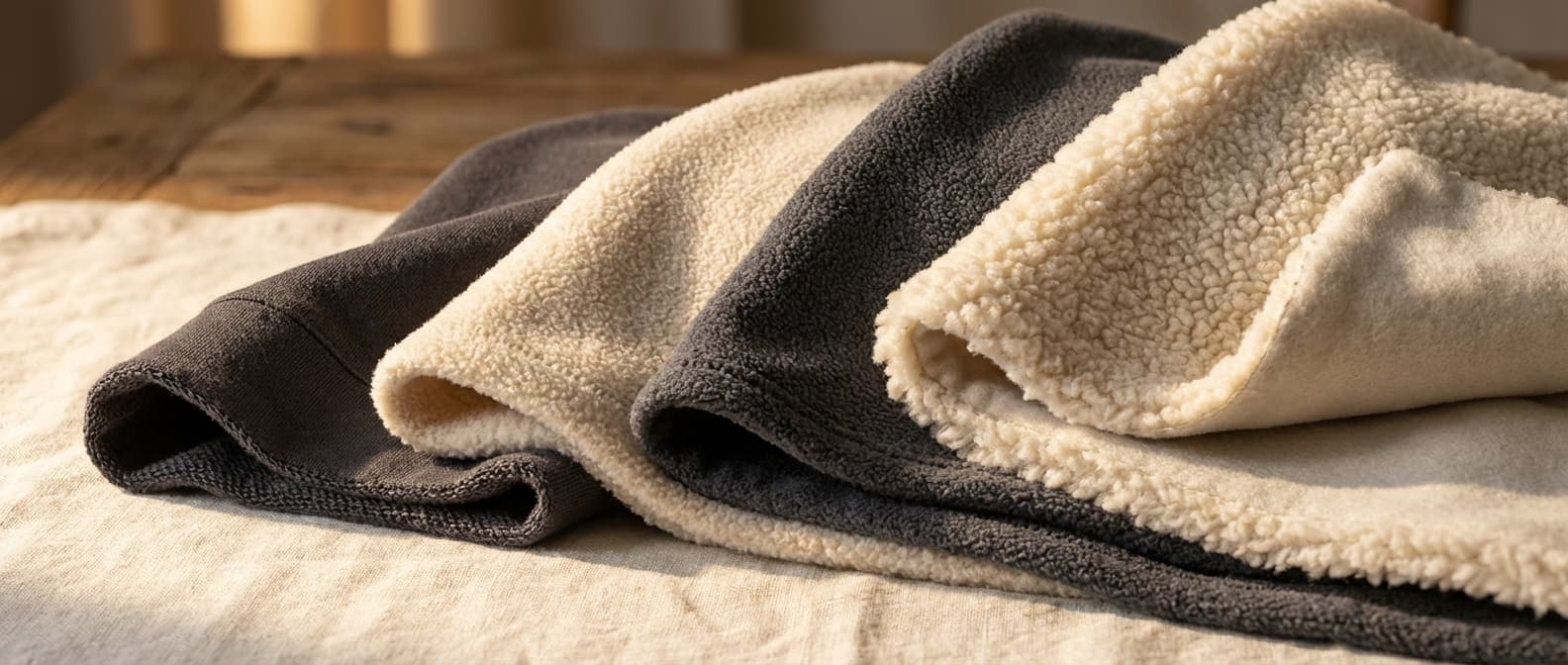
Introduction
You've decided to add hoodies to your product line. Smart move — hoodies are the backbone of streetwear, athleisure, and casual fashion. They offer high perceived value, strong margins, and year-round demand.
Then comes the question that stops most new brands: "What type of fleece do you want?"
French terry. Brushed fleece. Polar fleece. Loop-back. Sherpa. The options seem endless, and the differences aren't obvious until you've made the wrong choice and received 500 hoodies that don't match your vision.
This guide breaks down every fleece type, explains when to use each, and helps you choose the right fleece for your specific product goals.
What Makes Fleece Different from Regular Fabric?
Before comparing fleece types, understand what makes fleece special.
Fleece isn't a fiber — it's a construction method. Most fleece is made from cotton, polyester, or blends, but what defines fleece is its structure: a knit fabric with a raised, soft surface created through brushing or looping.
This construction creates several properties that make fleece ideal for comfortable, warm garments:
- Insulation — The raised fibers trap air, creating warmth without excessive weight.
- Softness — The brushed or looped surface feels gentle against skin.
- Breathability — Despite warmth, fleece allows moisture vapor to escape.
- Stretch — The knit construction provides natural stretch and comfort.
- Easy Care — Most fleece is machine washable and quick-drying.
Now let's examine each fleece type in detail.
French Terry: The Versatile Foundation
What It Is
French terry is a knit fabric with loops on one side (inside) and a smooth, soft surface on the other side (outside). Unlike brushed fleece, the interior loops remain intact rather than being brushed into a fuzzy pile.
The Structure
Imagine tiny loops of yarn on the inside of your garment. These loops create a textured interior that's soft but not fuzzy. The outside appears smooth with a subtle knit texture.
Characteristics
- Weight Range: Typically 240-340 GSM
- Warmth Level: Light to medium — suitable for transitional seasons
- Interior Feel: Soft loops, textured but not fuzzy
- Exterior Look: Smooth, clean appearance with subtle texture
- Breathability: Excellent — the loop structure allows airflow
- Stretch: Good natural stretch from knit construction
- Drape: Relaxed, comfortable drape
Best For
- Lightweight hoodies — Perfect for spring, autumn, or air-conditioned environments.
- Year-round wear — Not too hot for mild summer evenings, not too cold for moderate winters.
- Athleisure — The breathability makes it comfortable during light activity.
- Layering pieces — Works well under jackets without adding bulk.
- Fashion-forward styles — The smooth exterior takes prints beautifully and looks refined.
Common Uses
Lightweight pullover hoodies. Zip-up hoodies for transitional weather. Joggers and sweatpants. Crew neck sweatshirts. Casual dresses and tunics.
Pros
Breathable and comfortable across temperatures. Smooth exterior ideal for printing. Lighter weight than brushed fleece. Less likely to pill than brushed alternatives. Maintains shape well after washing. Versatile across seasons.
Cons
Less warm than brushed fleece — not ideal for cold climates. Loop interior may feel less cozy to some customers. May not meet expectations of customers wanting "thick, warm hoodies."
Price Point
Mid-range. Typically less expensive than heavy brushed fleece due to lower GSM and simpler finishing process.
Our Recommendation
French terry is ideal for brands targeting year-round wear, warmer climates, or athleisure markets. It's also perfect for fashion-focused hoodies where the smooth exterior appearance matters more than maximum warmth.
Recommended GSM: 280-320 for standard hoodies, 240-280 for lightweight styles.
Brushed Fleece: The Cozy Classic
What It Is
Brushed fleece (also called brushed-back fleece) starts as French terry but undergoes an additional brushing process. Machines with fine wire bristles brush the interior loops, breaking them apart and creating a soft, fuzzy pile.
The Structure
The interior becomes a dense layer of soft, fuzzy fibers rather than intact loops. This pile traps more air than loops, creating superior insulation. The exterior typically remains smooth or receives light brushing for added softness.
Characteristics
- Weight Range: Typically 280-400+ GSM
- Warmth Level: Medium to high — suitable for cold weather
- Interior Feel: Soft, fuzzy, cozy pile
- Exterior Look: Smooth or lightly brushed, substantial appearance
- Breathability: Moderate — less than French terry due to denser pile
- Stretch: Good, though slightly less than French terry due to weight
- Drape: More structured due to weight and density
Best For
- Cold weather hoodies — The fuzzy interior provides genuine warmth.
- Cozy comfort products — When "soft and warm" is your brand promise.
- Premium positioning — The weight and feel signal quality.
- Streetwear — The substantial weight matches streetwear aesthetics.
- Winter collections — Seasonal products designed for cold months.
Common Uses
Winter hoodies. Heavyweight sweatshirts. Warm joggers and sweatpants. Loungewear. Cold-climate athletic wear.
Pros
Superior warmth and insulation. Immediately cozy feel that customers love. Premium, substantial hand-feel. Excellent for cold climates. Strong perceived value due to weight.
Cons
Too warm for moderate climates or indoor wear. Heavier, which increases shipping costs. Can pill over time if low quality. Less breathable during activity. May shrink more than French terry if not pre-shrunk.
Price Point
Higher than French terry due to additional processing (brushing) and typically higher GSM.
Our Recommendation
Brushed fleece is the go-to choice for brands selling into cold climates, positioning on premium quality, or specifically marketing warmth and comfort. If your customer expects to feel cozy and warm, brushed fleece delivers.
Recommended GSM: 320-360 for standard warmth, 380-420+ for heavyweight/streetwear.
Polar Fleece: The Synthetic Performer
What It Is
Polar fleece (often just called "fleece") is a synthetic fabric made from polyester. Unlike French terry and brushed fleece which are typically cotton-based, polar fleece is engineered for specific performance properties.
The Structure
Polyester fibers are knit into a fabric, then brushed on both sides to create a double-sided pile. The result is a lightweight, extremely warm fabric with fuzzy texture inside and out.
Characteristics
- Weight Range: Typically 180-300 GSM (lighter than cotton fleece at equivalent warmth)
- Warmth Level: High warmth-to-weight ratio
- Interior Feel: Soft, fuzzy pile
- Exterior Look: Fuzzy, textured appearance
- Breathability: Good moisture-wicking, but less natural airflow than cotton
- Stretch: Moderate — less than cotton fleece
- Drape: Depends on weight, generally less refined drape than cotton
Best For
- Outdoor and athletic wear — Moisture-wicking and quick-drying properties.
- Performance layering — Lightweight warmth for active use.
- Budget-conscious brands — Typically less expensive than quality cotton fleece.
- Technical products — Where performance matters more than natural fiber aesthetics.
Common Uses
Athletic fleece jackets. Outdoor mid-layers. Performance hoodies. Budget sweatshirts. Blankets and throws.
Pros
Excellent warmth-to-weight ratio. Quick-drying and moisture-wicking. Typically less expensive than cotton fleece. Lightweight for warmth provided. Durable and easy care. Retains warmth even when damp.
Cons
Synthetic feel — some customers prefer natural fibers. Can generate static electricity. Less breathable in non-active situations. Environmental concerns about microplastic shedding. Doesn't absorb moisture (sweat sits on skin). Less premium perception than cotton fleece.
Price Point
Generally lower than equivalent cotton fleece, though performance-grade polar fleece can be premium-priced.
Our Recommendation
Polar fleece suits performance-oriented brands, outdoor products, or price-sensitive markets where synthetic content is acceptable. For fashion, streetwear, or premium positioning, cotton-based fleece typically creates better brand perception.
Recommended GSM: 200-240 for lightweight layers, 260-300 for standard fleece jackets.
Sherpa Fleece: The Statement Texture
What It Is
Sherpa fleece mimics the look of sheep's wool with a distinctively bumpy, curly pile. It's typically polyester-based and used as a lining or exterior texture for maximum visual and tactile impact.
The Structure
The pile is constructed to create irregular, wool-like curls rather than a uniform fuzzy surface. This creates the characteristic "sheep" texture that's immediately recognizable.
Characteristics
- Weight Range: Typically 250-400 GSM
- Warmth Level: High — excellent insulation
- Feel: Plush, deep texture
- Look: Distinctive wool-like curly texture
- Breathability: Moderate
Best For
- Lined hoodies and jackets — Sherpa lining adds warmth and visual appeal.
- Statement pieces — The texture is a design feature itself.
- Cold weather products — Genuine warmth for winter.
- Trend-driven products — Sherpa has strong fashion appeal.
Common Uses
Hoodie linings. Jacket linings. Exterior texture on pullovers. Blankets. Accessories like hats and scarves.
Pros
Immediately cozy visual appeal. Excellent warmth. Strong trend presence. Premium perception when well-executed.
Cons
Can look cheap if low quality. Sheds initially. Adds significant weight. Specific aesthetic — not versatile. Can flatten over time with wear.
Our Recommendation
Sherpa works well as a lining or accent rather than full exterior construction. Consider sherpa-lined hoodies for winter collections or as a premium tier product.
Cotton-Poly Blends: The Best of Both
Many fleece fabrics blend cotton and polyester to combine benefits of both fibers.
Common Blend Ratios
- 80% Cotton / 20% Polyester — Maintains cotton feel with added durability and reduced shrinkage.
- 60% Cotton / 40% Polyester — Balanced blend with good softness and performance.
- 50% Cotton / 50% Polyester — Equal properties, often called CVC (Chief Value Cotton) when cotton is slightly higher.
Why Brands Choose Blends
- Reduced shrinkage — Polyester stabilizes cotton's tendency to shrink.
- Improved durability — Polyester adds strength and abrasion resistance.
- Better shape retention — Blends hold structure longer.
- Lower cost — Polyester is less expensive than cotton.
- Easier printing — Some print methods work better on blends.
Considerations
Blends feel less natural than 100% cotton. Higher polyester content reduces breathability. Some customers specifically want pure cotton. Environmental concerns about synthetic content.
Our Recommendation
80/20 cotton-poly blends offer an excellent balance — maintaining premium cotton feel while adding practical benefits. For brands prioritizing natural fibers, 100% cotton fleece is available at slightly higher cost.
Fleece Comparison Table
Fleece TypeWarmthWeight (GSM)Best SeasonInterior FeelPriceFrench TerryLight-Medium240-340Spring/Autumn/Year-roundLoops (textured)$$Brushed FleeceMedium-High280-420+Autumn/WinterFuzzy pile (cozy)$$$Polar FleeceHigh (lightweight)180-300Winter/OutdoorFuzzy (synthetic)$SherpaHigh250-400WinterDeep curly pile$$
Choosing Fleece for Your Products
Decision Framework
Step 1: Define Your Climate Target
Where will your customers wear this product?
Warm climates or year-round indoor wear → French terry. Cold climates or winter focus → Brushed fleece. Outdoor/performance use → Polar fleece.
Step 2: Define Your Price Position
What quality tier are you targeting?
Budget → Polar fleece or lightweight French terry. Mid-range → Standard French terry or light brushed fleece. Premium → Heavy brushed fleece or premium French terry.
Step 3: Consider Your Brand Values
What matters to your brand and customers?
Natural fibers → 100% cotton French terry or brushed fleece. Performance → Polar fleece or cotton-poly blends. Sustainability → Organic cotton fleece or recycled polyester. Luxury feel → Heavy brushed fleece.
Step 4: Think About End Use
How will customers wear this product?
Active wear → French terry (breathable). Lounging/comfort → Brushed fleece (cozy). Layering → French terry (not bulky). Statement piece → Heavy brushed fleece or sherpa.
Common Mistakes When Choosing Fleece
Mistake 1: French Terry for Winter Products
If you're marketing "warm winter hoodies" but using lightweight French terry, customers will be disappointed. The product won't deliver on the promise. Match fleece type to marketing claims.
Mistake 2: Heavy Fleece for Warm Climates
Selling 400 GSM brushed fleece hoodies to customers in Dubai or Miami? They'll overheat wearing it indoors. Know your market's climate.
Mistake 3: Ignoring Interior Feel
Some brands focus only on exterior appearance. But customers wear the interior against their skin. Always evaluate how the inside feels, not just how the outside looks.
Mistake 4: Assuming All Fleece is Equal
180 GSM French terry from Supplier A may feel completely different from 180 GSM from Supplier B. Cotton quality, brushing technique, and finishing all affect the final product. Always sample.
Mistake 5: Forgetting About Care Instructions
Different fleece types have different care requirements. Brushed fleece may pill if washed incorrectly. Polar fleece may hold static. Make sure your care labels are accurate.
Fleece Recommendations by Product Type
Pullover Hoodies
MarketRecommended FleeceGSM RangeBudgetFrench Terry260-300StandardFrench Terry / Light Brushed300-340PremiumBrushed Fleece340-380StreetwearHeavy Brushed Fleece380-450
Zip-Up Hoodies
MarketRecommended FleeceGSM RangeLightweightFrench Terry260-300StandardFrench Terry300-340WinterBrushed Fleece340-380
Crew Neck Sweatshirts
MarketRecommended FleeceGSM RangeFashionFrench Terry280-320ClassicBrushed Fleece320-360PremiumHeavy Brushed360-400
Joggers / Sweatpants
MarketRecommended FleeceGSM RangeSummer/ActiveFrench Terry260-300Year-roundFrench Terry300-340Winter/LoungeBrushed Fleece320-380
Working with Qumash Lab
We manufacture hoodies and sweatshirts in all fleece types discussed in this guide. Our production specializes in:
- French Terry: 260-340 GSM in 100% cotton and cotton-poly blends.
- Brushed Fleece: 300-420 GSM for premium warmth and softness.
- Custom Blends: We can source specific compositions based on your requirements.
Our sample kits include fleece swatches so you can feel French terry versus brushed fleece yourself. We strongly recommend touching the actual fabric before committing to bulk production.
When you request a quote, tell us about your target market, climate, and positioning. We'll recommend the fleece type and GSM that best fits your product vision.
Conclusion
Fleece selection shapes your hoodie's identity. Choose wrong, and you'll have a product that doesn't match customer expectations. Choose right, and you'll have a product that feels exactly as good as it looks.
The core principles:
French terry for versatility, breathability, and year-round wear. Brushed fleece for warmth, coziness, and premium positioning. Polar fleece for performance, outdoor use, and budget products. Match fleece weight and type to your specific market climate and customer expectations.
Don't guess — sample multiple fleece types before production. Your hands will tell you what specifications alone cannot.
Ready to choose your fleece? Request our sample kit with French terry and brushed fleece swatches at multiple weights. Feel the difference yourself before you decide.
Request Sample Kit Get a Quote
This article is part of Qumash Lab's Fabric Education series, helping brands make informed manufacturing decisions.