
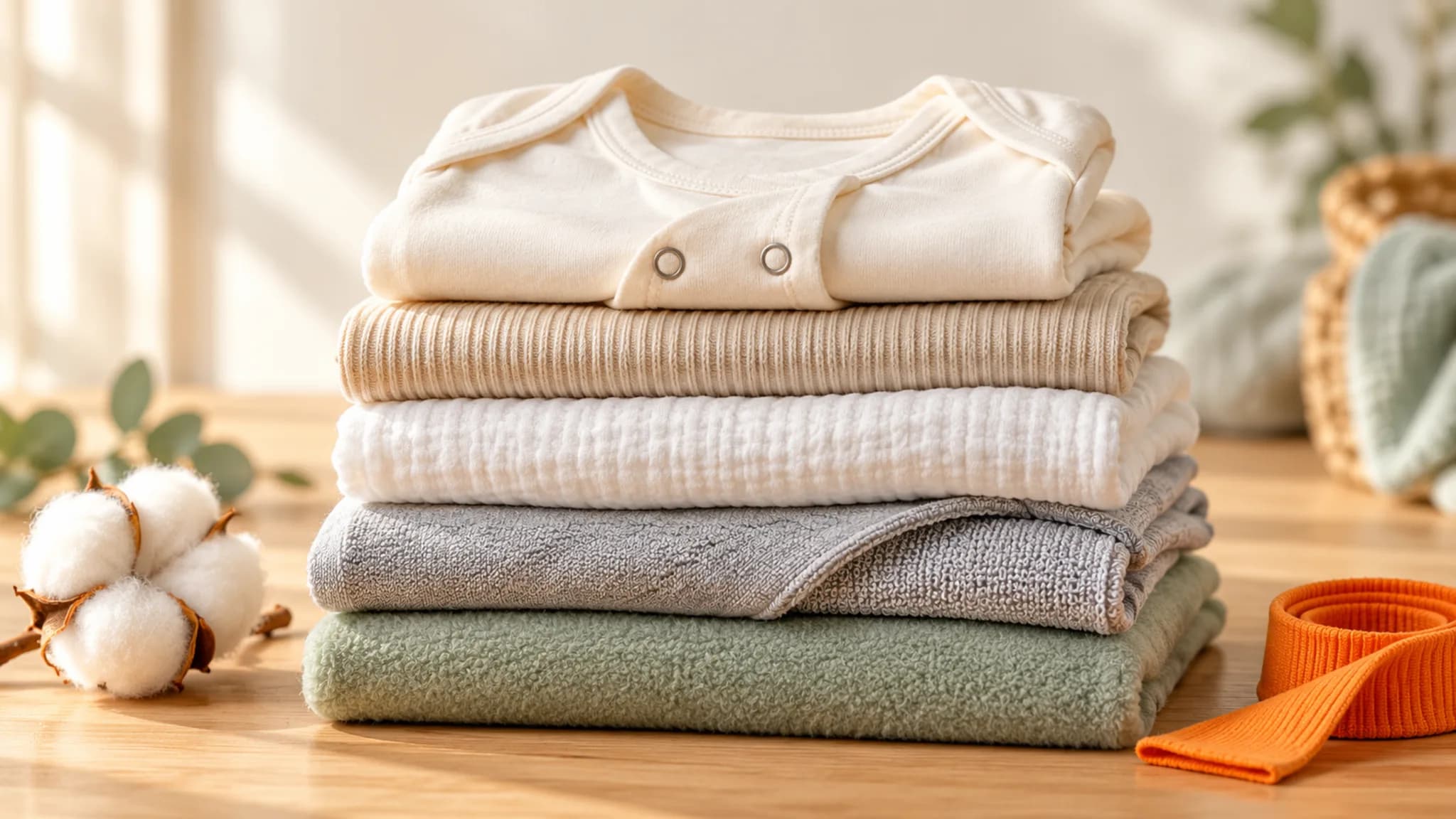
For babies, soft cotton knits are the safest choice: interlock for bodysuits and sleepsuits, because it is smooth on both sides and does not curl; single jersey for light tees; and rib for leggings, cuffs and snug fits. For older children, French terry and brushed fleece suit hoodies and joggers, and cotton-rich blends with a little polyester survive the playground better. Next to a baby's skin, choose cotton or cotton with a small share of elastane, ask for fabric tested for harmful substances, and specify pre-shrunk fabric, because kids clothes are washed constantly.
What matters in kids fabric
- Softness: baby skin is thin and sensitive, so the inside face matters as much as the outside.
- Breathability: natural fibres such as cotton let heat and moisture escape.
- Stretch: fabric that stretches makes dressing a wriggling child quicker and kinder.
- Durability: knees, elbows and seats take a beating from crawling and play.
- Wash resistance: kids clothes are washed often and hot, so shrinkage and colour loss must be controlled.
- Clean chemistry: low residues, skin-friendly pH and dyes tested for harmful substances.
The main fabrics compared
| Fabric | Feel | Stretch | Typical GSM | Best for | Watch out for |
|---|---|---|---|---|---|
| Single jersey | Light, smooth face | Moderate, more with elastane | 140 to 180 | T-shirts, light tops, summer sets | Edges curl and seams can twist |
| Interlock | Thicker, smooth on both sides, very soft | Moderate and stable | 160 to 220 | Bodysuits, sleepsuits, baby sets | Costs more than jersey |
| Rib (1x1 or 2x2) | Textured, springy | High stretch across the width | 180 to 260 | Leggings, cuffs, neckbands, fitted tops | Can bag without a little elastane |
| French terry | Smooth outside, loops inside | Moderate | 220 to 300 | Light hoodies, joggers, rompers | Less warm than brushed fleece |
| Brushed fleece | Soft and fluffy inside | Low to moderate | 260 to 340 | Hoodies, joggers, winter sets | Low-grade blends pill |
| Muslin (cotton gauze) | Airy and crinkly, woven | None | Light | Swaddles, bibs, summer sets | Woven, so it does not stretch for dressing |
| Piqué | Textured, structured | Low | 180 to 220 | Polos and school uniforms | Less soft than jersey |
Interlock vs jersey for baby clothes
This is the most common question from new babywear brands. Single jersey is a single layer of knitting, with a smooth face and a looped back. It is light and cheap, but it curls at the edges and can twist after washing. Interlock is a double knit: two layers knitted together, smooth on both sides. It is thicker, softer against the skin, holds its shape and does not curl, which makes snaps and envelope necks sit neatly.
The usual choice: interlock for bodysuits, sleepsuits and anything worn directly against a baby's body; jersey for lighter tops and summer pieces, especially for older babies and toddlers.
Fibres: what to choose
| Fibre | Good for | What to know |
|---|---|---|
| Combed cotton | Almost everything | Softer and smoother than carded cotton; see our cotton types guide |
| Organic cotton | Premium babywear | Look for GOTS or OCS certification to back up the claim |
| Cotton with 3 to 5% elastane | Leggings, rib, fitted tops | Better recovery, so knees and cuffs do not bag |
| Cotton-polyester blends | Kids hoodies, joggers, school wear | Tougher and faster drying; keep cotton on the inside face for comfort |
| Viscose from bamboo | Soft, silky sleepwear and sets | It is viscose (rayon); in the US it must be labelled as rayon or viscose made from bamboo |
| Polyester | Sportswear and outerwear for older kids | Durable and quick drying, but less breathable next to a baby's skin |
Is polyester safe for baby clothes?
Polyester is not unsafe, but it is less breathable than cotton, and babies cannot regulate their temperature as well as adults. Most brands keep cotton next to the skin for babies and use polyester in outer layers, sportswear and older children's ranges.
GSM guide for kids products
| Product | Fabric | GSM range |
|---|---|---|
| Baby bodysuit | Cotton interlock or jersey | 160 to 200 |
| Baby sleepsuit | Cotton interlock | 180 to 220 |
| Baby leggings | Cotton rib with elastane | 200 to 240 |
| Kids T-shirt | Cotton jersey | 150 to 180 |
| Kids hoodie | French terry or brushed fleece | 260 to 320 |
| Kids joggers | French terry or brushed fleece | 260 to 320 |
| School polo | Cotton or poly-cotton piqué | 180 to 220 |
Kids garments are smaller, so the weights are a little lighter than adult versions of the same product. Our GSM guide explains how weight changes feel and warmth.
Fabric choice by age
| Age | Priorities | Fabrics that work |
|---|---|---|
| 0 to 12 months | Softness, easy dressing, clean chemistry | Cotton interlock, soft jersey, rib with elastane, muslin |
| 1 to 3 years | Stretch for movement, durability at the knees | Interlock, rib, French terry, light fleece |
| 4 to 8 years | Durability, easy care, colourfastness | Jersey, French terry, cotton-rich fleece, piqué |
| 9 to 14 years | Style, fit, performance | Heavier jersey, fleece, polyester sportswear, cotton spandex |
Chemistry: what makes a fabric baby-friendly
- Harmful substance testing: OEKO-TEX STANDARD 100 has its strictest limits for articles for babies and toddlers up to 36 months (Product Class I). A certified fabric is a good starting point, though the finished garment needs its own checks.
- Low formaldehyde and skin-friendly pH: both are checked in standard lab tests. Our guide to clothing lab tests explains them.
- Soft, tested inks: water-based inks give a soft print that breathes; whatever ink you choose, ask for test reports suitable for children's products.
- Safe trims: snaps, zips and labels matter as much as fabric. See our kids clothing safety checklist.
Pre-shrinking and wash durability
Children's clothes go through the wash far more often than adult clothes, often at higher temperatures. Ask for fabric that has been compacted or pre-shrunk, agree a shrinkage limit before bulk, and test the sample after washing, not just before. Strong colours should be tested for colourfastness so a red hoodie does not turn the rest of the family wash pink. Our shrinkage guide covers this in detail.
Ordering kids fabric from us
Our MOQ is 50 pieces per style per colour in our stock fabrics and colours, 150 in your exact Pantone colour, and 200 with your own fabric composition in your Pantone colour. Sizes can be mixed freely within a style. If you need certified organic cotton or a specific fabric, tell us at the quote stage and we will confirm availability and the right tier for your order. See our kids clothing range and our page for kids clothing brands, or request a quote.
Key facts
- Interlock is the go-to fabric for baby bodysuits and sleepsuits: smooth on both sides, soft and stable.
- Rib with 3 to 5% elastane suits leggings, cuffs and fitted tops because it recovers its shape.
- Typical weights: baby bodysuits 160 to 200 GSM, kids T-shirts 150 to 180, kids hoodies 260 to 320.
- Bamboo fabrics are usually viscose and must be labelled as rayon or viscose made from bamboo in the US.
- OEKO-TEX STANDARD 100 Product Class I has the strictest limits, for items for babies up to 36 months.
- Specify pre-shrunk fabric and test after washing, because kids clothes are washed often.
Frequently asked questions
What is the best fabric for baby clothes?
Soft cotton interlock for bodysuits and sleepsuits, cotton jersey for light tops, and cotton rib with a little elastane for leggings and cuffs.
Should I use interlock or jersey for baby bodysuits?
Interlock. It is softer on both sides, does not curl at the edges and holds snaps and envelope necks neatly. Jersey suits lighter tops.
Is bamboo fabric good for babies?
It feels very soft and drapes well, but most bamboo fabric is viscose, a regenerated fibre, and must be labelled honestly as rayon or viscose made from bamboo in the US.
Is polyester safe for baby clothes?
It is not unsafe, but it breathes less than cotton. Keep cotton next to a baby's skin and use polyester in outer layers and sportswear for older children.
What GSM is best for a kids hoodie?
Usually 260 to 320 GSM in French terry or brushed fleece: warm enough without being stiff on a small body.
Should kids clothes be pre-shrunk?
Yes. Kids clothes are washed often and hot, so specify compacted or pre-shrunk fabric and agree a shrinkage limit before bulk.